Showing posts with label historical fiction. Show all posts

July 11, 2016

Book Review: People of the Book by Geraldine Brooks


I was out of town for a couple of days, and missed picking up Geraldine Brooks's latest book - The Secret Chord. Whoops! So I've re-requested it from the library. I feel like I have a love-hate relationship with most of her books - I loved Caleb's Crossing and People of the Book, but I was super irritated by March, and had mixed feelings about Year of Wonder

My favorite, People of the Book, tells the story of the Sarajevo Haggadah, an illustrated Jewish manuscript from the 15th century that needs authentication from Dr. Hanna Heath, an Australian rare books expert. Hanna flies to war-torn Sarajevo in 1996, and is entranced by the beauty of the Haggadah. According to Jewish tradition, images of the Scriptures are not allowed, but this book proves the exception to the rule. Hanna finds several small clues hidden between the pages of the book: such as a wine stain, a salt stain, and a white hair, that set her on a quest to find out who created this unusual Haggadah, and why.


I liked that People of the Book revealed the secrets of the Haggadah in reverse order, starting with the story of a young Jewish girl running from the Nazis in WWII, and the Muslim family that protected her and the Haggadah. The story progressed from WWII back to turn-of-the-century Vienna, then back to sixteenth century Venice, then back to Spain during the Inquisition, and finally back to the source of the book. The book is told in alternating chapters, flashing back and forth between the story of Hanna in the present day, and the other people who helped protect the book over its long and varied history.

And I appreciated that although People of the Book could have easily fallen into the same silly historical-quest type mold as Dan Brown or Steve Berry or all the other copycats out there, it didn't. There was no big conspiracy, just a story of an intriguing young woman, her love for beautiful books, and this one particularly beautiful book that had touched so many lives over so many centuries. The plot was a tad predictable (the big surprise that Hanna is blindsided by was pretty obvious about six chapters earlier) but that's not a huge complaint, I didn't mind seeing exactly how the characters were going to get to that point of the story.

If you're looking for an enjoyable historical fiction book, I'd highly recommend People of the Book. And hopefully I can fill you in on The Secret Chord soon!


Are YOU a fan of Geraldine Brooks?

April 3, 2016

An Interview With M.J. Carter

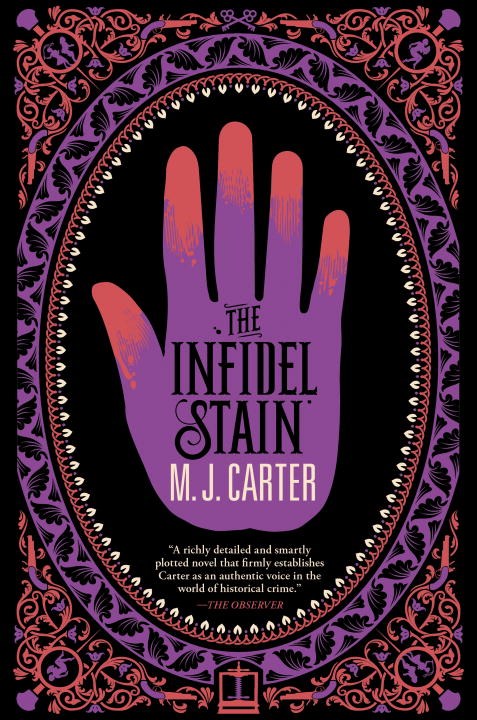
Last month I got to interview M.J. Carter for Shelf Awareness. She writes a really fun Victorian mystery series (find my review of The Infidel Stain over at Shelf Awareness), and she had some awesome replies to my questions, so I thought you guys would be interested in the interview. 

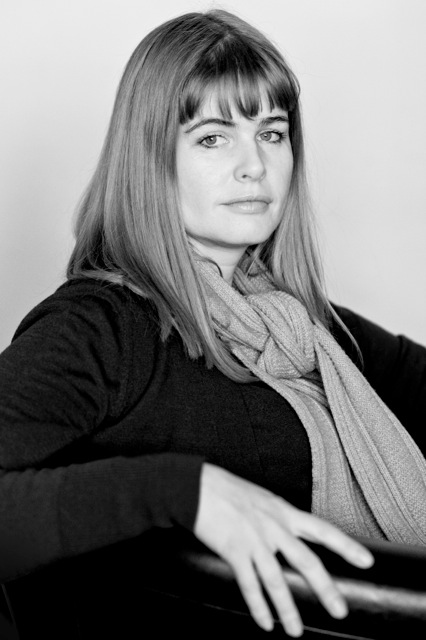
M.J. Carter lives with her partner and two sons in London, about five miles from where she was born. After spending many years working for newspapers and writing lengthy nonfiction books (Anthony Blunt: His Lives; The Three Emperors), in 2010 she turned to fiction, beginning with the Blake and Avery series, set in the early years of Victoria's reign. The first was The Strangler Vine, and the second, The Infidel Stain (reviewed below), has just been published by Putnam.

Your Blake and Avery series is set during a transitional time in English history, as the railroad and the telegraph connected the world more quickly. What made you choose this era for your series of detective novels?

I think transitional periods are intrinsically compelling--there's an inherent friction as one period gives way to another. Some are left behind, some find it hard to adapt, and the new is both exciting and full of unforeseen consequences.

I find the first 13 years of Queen Victoria's reign (1837-1850) particularly fascinating. In the space of just a few years, horse and cart gave way to railways; letters to telegraph. London became the biggest city and the biggest trading centre the world had ever seen. There are lots of great things to write about: London journalism and its gutter roots; politics and sex; foreigners in London--from the Irish to Karl Marx; the amazing corruption and bank failures and bubbles of the mid-1840s. And the cultural climate changed too: the rowdier, less polite and socially more easy-going Georgian era gave way to the more prudish, less tolerant, preachy, money-oriented Victorian one. There were winners, and a lot of losers, especially among the poor. People were worried that the world was changing too fast.

I think there are fascinating parallels with the last 15 years, with the Internet and the growth of the global economy.

The first book, The Strangler Vine, is set in India, while the second, The Infidel Stain, takes place in London. Why did you move the series? Was the London setting easier to research?

I always knew I wanted to put my detective (or inquiry agent, as he's called) in London and write about Britain in the 1840s. Then I discovered the Thugs and the question of what they really were, and what the British did to them in India, and I really wanted to write about that. So I decided to start Blake off in India, with a sort of origins story. The frontiers of the British empire were places where people from unconventional or lowly backgrounds could find opportunity and reinvent themselves--rather like the American West. Also at this time, the British were just beginning to look upon the people in the countries they occupied as beneath them, but there were still places where the British could encounter different cultures and interact with them. I thought it was a perfect place for Blake to have got himself educated and trained and also to have become alienated from the less appealing parts of British society.

I went [to India] for two weeks with my family--frantically taking notes--read vast tomes, and had a really good time doing it. Then I put all of it into the book. I had to come back to England for the next book because I'd used up everything I knew about India!

As for whether it's easier to write about London, there's a great phrase: "the past is a foreign country"--all writing about the past, wherever you're locating it, involves rendering a time and place you will never be able to see for yourself.

Has the past become such a foreign country that modern London doesn't connect to your novels? Or do you wander the streets to help you with your writing?

I was up by the Strand just last week. I love walking in London and thinking about the layers of history that underlie what I'm looking at. Much of the topography in the bit I write about in The Infidel Stain is still the same, though the Strand is certainly not the glamorous street it was in the high Victorian period, and there's almost nothing left of any buildings from the 1840s, though there are still a few theatres and a couple of publishers. The area where the lowlife Holywell and Wych streets were located was cleared at the beginning of the 19th century and replaced by new streets and a large crescent, but the two churches around it are still there, as is the rather beautiful old Theatre Royal in Drury Lane.

There are many tragic instances of social injustice in The Infidel Stain, and some of them (such as transportation for minor crimes) seem especially appalling to modern sensibilities. Is it important to you to highlight social injustice in your books, or is it a natural byproduct of writing about the era?

I partly want to give readers a sense of what the world was like at that time, in particular what would shock us but was regarded as quite acceptable then. It's easy to romanticize the past, especially this period, which is absolutely what we think of as Dickensian England. I think if you're writing about a period, part of your job is to give a really vivid sense of the sensibilities of the time--it's both interesting and important to know what attitudes we share with that time and what was different. I must admit also that I did want to write about some of the more horrible conditions in which people lived. The books are meant to be implicitly political--but not overstatedly so.

Blake and Avery are an engagingly disparate duo--Avery's upper-class naiveté is a nice foil for the brilliant, curmudgeonly, working-class Blake. Is one of them more fun to write than the other?

Avery comes easier to write, he's so fallible and reminds me a bit of me. Blake is really a fantasy character--cool, silent, brilliant, and therefore harder to make credible and very much not like me. But actually I love writing him more, even though it's a bit harder.

There are tantalizing hints of trouble in Avery's personal life in The Infidel Stain. Can we expect to find out more about his life and marriage in the future?

Ooooh, yes.

Wow, speaking of tantalizing hints! Anything more specific about what you're working on now?

I'm almost at the end of the third Blake and Avery novel, which will be called The Devil's Feast. It is set in London again, but in high-end London, in the gentlemen's clubs of Pall Mall. It's about food and one of the first celebrity chefs, a Frenchman called Alexis Soyer (who features briefly in The Infidel Stain), who really did exist. He was a genius, and having made himself the most famous chef in the London, he organised a soup kitchen to help in the Irish famine. He completely re-organised the provisioning of the British army and invented a portable gas stove that was used by the British army until 1950s.

After that, I'm toying with putting Blake and Avery on one of the new iron ships that Isambard Kingdom Brunel invented for the Atlantic crossing from Britain to the U.S. in the 1840s and maybe sending them to New York. But it's all up in the air right now.

Do YOU like Victorian mysteries?

October 10, 2015

31 Days of Book Pics - Day 10 - Unforgettable


I realize this is rather an odd juxtaposition of books, but bear with me for a minute! When I was in 5th grade my teacher had the rest of the class read My Brother Sam is Dead, during our Revolutionary War unit, but she made me read 8 books. (Clearly, she knew me well.) I remember My Brother Sam is Dead and Johnny Tremain, although I've forgotten some of the others, but Time Enough for Drums is the one that stands out. It just grabbed me for some reason; perhaps because Jemima's spunkiness was irresistible. (I tried pretty hard to talk Noel into the name Jemima when I was pregnant with Eleanor, but he couldn't get over the Aunt Jemima/syrup association.) Anyway, I've never forgotten Time Enough for Drums, and I think it's a big part of why I always have enjoyed Revolutionary War era books, like those of David McCullough or Joseph Ellis.

The Given Day I just read a few years ago, but for some reason it's kind of haunted me. It's set in Boston during the 1910s, and it's such a big novel, with themes of immigration, love, prejudice, war, betrayal, labor, etc, and I find myself mentally referencing it a lot, whenever I read other immigration fiction, or even on Labor Day this year, when I was trying to explain labor unions to Eleanor. It was great on audiobook by the way, if you're thinking of reading it -- the narrator did an awesome job with all the Bostonian and varying Irish accents. 


What books do YOU find unforgettable?


This is Day 10 of my 31 Days of Book Pics series for 2015. I'd love it if you'd play along on Instagram and Twitter by posting a bookish picture each day of October. Don't forget to hashtag your photos with #31bookpics so that I can find them! Click the image below to find the whole series!


August 20, 2015

Book Review: Lauren Willig's The Lure of the Moonflower


Lauren Willig (That Summer, The Other Daughter) has wrapped up her excellent Pink Carnation series with another excellent entry. You guys know I love these books, they're just perfect fun reading... and I generally learn some historical tidbit while reading them, which makes it feel a little bit less like book candy.

In The Lure of the Moonflower, which finishes the story begun 12 books earlier in The Secret History of the Pink Carnation, the intrepid British agent, aka the super-spy known as the Pink Carnation, aka Miss Jane Wooliston, finally gets a love story of her own. 

Jane is in Portugal, desperately attempting to find the queen, who was spirited away when the rest of the Portuguese royal family fled to Brazil as Napoleon's troops invaded. In spite of all her other espionage-related talents, the Pink Carnation doesn't speak Portuguese. She turns for assistance to the notorious Moonflower, aka Jack Reid. Jack is an Anglo-Indian turned French agent, then turned back into British spy, and Jane can only hope that his assistance is reliable.

With a dour and wintry Portuguese setting, The Lure of the Moonflower isn't quite as frothy as some of the other books in the series. But it includes Willig's characteristic tongue-in-cheek humor, and the framing modern story, which continues the shenanigans of Eloise, academic researcher of early 19th-century espionage, is sure to make readers laugh out loud. Something like Bridget Jones meets The Scarlet PimpernelThe Lure of the Moonflower is a must-read for lovers of chick lit and historical fiction. With tidy conclusions to Eloise's modern-day romance and to Jane's escapades nearly two centuries earlier, The Lure of the Moonflower is a fitting finale for a fun series.

It wasn't my favorite of the series, but it did wrap things up nicely. And it didn't have the sexy interludes that The Passion of the Purple Plumeria had (listened to that one on audio...aaawwwkward...)


Are YOU a fan of the Pink Carnation series?


I originally wrote most of this review for Shelf Awareness. And this post contains some of my affiliate links.


July 25, 2015

Summer Readin' (And an Awesome GIVEAWAY for You!)


We've had a couple of big milestones in our family this week. Monday was Eleanor's first day of school. And Wednesday is our 9th wedding anniversary!

Since I'm busy hanging out with my big ole kindergartener, and celebrating with Noel, I'm going to take a few days off blogging.

But I'm going to leave with you some reviews of some three books I've really enjoyed lately - AND, I'm giving away copies of all of them!


The Third Wife

Lisa Jewell is sure to appeal to fans of Liane Moriarty and Jojo Moyes. Just like Jewell's earlier novels, The Third Wife explores complicated family dynamics in a genuine way that is witty yet realistically nuanced.

Adrian Wolfe has been mourning the death of his third wife, Maya, for a year. Maya's death seemed to be a tragic accident--she stepped out in front of a bus--until a strange woman shows up asking weird questions, and then a series of poison pen e-mails surfaces. Suddenly Adrian is rethinking everything: Maya's death, his two divorces and the way he's raised his children.


(Read the rest of my review of this one over at Shelf Awareness.) 


The Other Daughter

Lauren Willig always has likeable historical heroines. (You may remember I really liked The Ashford Affair). In her latest (non-Pink Carnation) historical novel, Willig turns to the Edwardian era, and Rachel Woodley, a nursery governess.

When Rachel’s mother dies unexpectedly, Rachel discovers some shocking secrets about her past, including the fact that she's illegitimate, the other daughter, and her father is an earl. Determined to meet her father, she enlists the help of a gossip columnist named Simon to transform herself into one of London’s Bright Young Things. With freshly bobbed hair, Rachel slips into her new persona amidst the fast-paced world of high society London, although she may not be prepared for the secrets she will uncover.


If You Only Knew

Wedding dress designer Jenny Tate has had trouble distancing herself from her ex-husband, because he and his new wife are freakishly nice, and have even named their new daughter in Jenny's honor. Determined to escape this weird situation, Jenny leaves Manhattan for her hometown -- a small, upscale town on the Hudson River. She's excited to be close to her sister Rachel and her triplet nieces. Sadly, it turns out her move is perfectly timed to help Rachel; who thought she had the perfect marriage, until she discovered her husband was having an affair.


This was the first novel I've read by Kristan Higgins -- seems like this one is a bit of a departure from her usual funnier romances (I'd call it "women's fiction"). I really enjoyed it though! It won't be out until the end of August - so you'll have to wait a bit if you win.

Win All Three

Please fill out the following form to be entered to win (you may have to click through to see the form if you subscribe via email). One lucky winner will win ALL THREE books. See instructions in form for an additional giveaway entry. Max entries: 2 per person. (And you must have a US mailing address, sorry!) Giveaway will close 8/3/15, and I'll notify the winner soon after.


(FYI: I received advance copies of these books to review, either directly from the publisher or from Shelf Awareness. I contacted all 3 publishers and asked them if they'd give a copy to one of my readers, and they all said yes!)

July 8, 2015

The Best Books of The Year (So Far)

Quirky Bookworm: The Best Books of The Year (So Far): 9 Titles I Loved, including Historical Fiction, Mystery, Nonfiction, and more.

2015 is more than halfway over! I read 80 books in the first half of the year. (Well, I finished 79. I'm also counting The Martian because I started it in June, and I wanted an even number.)

Funniest
Attachments by Rainbow Rowell. Oh Rainbow. I love your books. SO MUCH. I sum them all up here. I particulary liked the friendship between Jennifer and Beth that's featured in Attachments. Runner up: Crazy Little Thing by Tracy Brogan.

Best Mystery
Gun Street Girl by Adrian McKinty. Set during the "Troubles" in Northern Ireland. I really enjoyed the noir-ishness, and the darkly funny Irish setting. Lines from it keep popping into my head, even though I read it back in January. Runner up: Fallout by Paul Thomas.

Best Nonfiction
Unbroken by Laura Hillenbrand. Oh man is this one intense. I cautiously recommend it - it's a great read, but there's a LOT of violence. What he endured is unbelievable. Runner Up: Bunker Hill by Nathaniel Philbrick.

Most Romantic
The Royal We by Heather Cocks and Jessica Morgan. Such fun, especially if you're a royal watcher. Read more of my ravings about The Royal We here. Runner up: The Rose Garden by Susanna Kearsley.

Best Science Fiction
The Martian by Andy Weir. This one completely blew me away. Who knew that a book with so much math could be so spectacularly good? Absolutely worth every bit of hype. Runner up: Red Rising by Pierce Brown.

Favorite Audiobook
Big Little Lies by Liane Moriarty. I was literally pacing my house listening to this one, because the suspense was so intense. Caroline Lee is an excellent narrator (I love Australian accents!), and this title was pitch perfect on audio. Runners Up: Fool's Fate by Robin Hobb, narrated by James Langton, The Martian by Andy Weird, narrated by R.C. Bray.

Best Historical(ish) Fiction
The Winter Sea by Susanna Kearsley. I've read a ton of Susanna Kearsley this year (read my full round-up here), but I really, really enjoyed both the historical and modern day story lines in this one, and the Scottish setting is great. Runner Up: The Siege Winter by Ariana Franklin.

Favorite YA Book
I think I'm going to go with Red Rising by Pierce Brown here. I really enjoyed These Broken Stars and The Winner's Curse too, but there was something so gripping about Darrow's story. (It's kinda Hunger Games meets The Knife of Never Letting Go, with an Irish flavor.) Can't wait for the rest of the trilogy. Runners Up: These Broken Stars by Amie Kaufman and The Winner's Curse by Marie Rutkoski.

Best Reread
Daddy-Long-Legs by Jean Webster. This is such a great little book. Sweet and charming, and full of pithy advice. So glad I picked it for the #YABMC. Runner-up: Cousin Kate by Georgette Heyer.

And for an overall favorite, I think I might have to go with The Martian! It's hard to know, since I just finished it, and it's fresh in my head, but I think it may end up being my favorite for all of 2015. It's amazing.


What are YOUR favorite books of the year?


April 13, 2015

Book Review: Into the Savage Country by Shannon Burke

Shannon Burke (Black Flies) sets Into the Savage Country at a pivotal moment in American history. In the late 1820s, American, Spanish and British trappers and adventurers are battling for supremacy in the western territories. These ragtag and fiercely loyal mountain men understand that their triumph or failure may affect the future for their respective nations.

Young William Wyeth, resolved to make his fortune in the West as a means to win the hand of the lovely widow Alene, sets out on a trapping expedition of breathtaking scope. The small brigade Wyeth joins is determined to trap in untouched Crow lands, but they are drawn into disputes between the Crow, Blackfoot and Gros Ventre tribes. With the British backing some tribes and the Spanish refusing southern passage, it will take all their wits to escape back to St. Louis, Mo., with their furs and their lives.

Told from Wyeth's point of view, Into the Savage Country pays homage to an often overlooked period in American history. There to witness the destruction of buffalo herds and the decimation of fur animals, Wyeth muses on the changes in both the burgeoning United States and himself. And as the months pass, Wyeth's bonds with his fellow brigade members cause him to rethink his ideas of friendship and bravery.

A quiet little novel, written in a spare style that belies the excitement between its covers, Into the Savage Country is a glimpse back to an almost forgotten lifestyle, and an era in which the wealth of a continent beckoned the adventurous. It's not my normal style at all, but I enjoyed it. It reminded me a bit of The High Divide, or some of Cormac McCarthy's books. (I told Noel I thought he'd like it, since he's a big McCarthy fan.)

The part that kept blowing my mind is that it takes place only 40 years after the Revolution. Nuts to think how fast America changed. 


Do you like Western American fiction?

I originally wrote most of this review for Shelf Awareness.

April 8, 2015

Around the World by Mystery: 35 Authors You Should Try

Quirky Bookworm: Around the World by Mystery: 35 Authors You Should Try - Great Books set in North Korea, France, England, Sweden, Iceland, New Zealand, Laos, and more!

Because of my obsession with mapping my books this year, I've been trying to find more books set in unusual countries. That reminded me that way back in 2012 I wrote a post titled "Around the World in 15 Mysteries". Since then I've found so many good authors that I'm going to update it to 35 this time. So pull up your armchair, and get ready for a whirlwind world tour. Highlighted titles are links to my reviews, images are affiliate links, in case you want to buy the book!


First, James Church's Inspector O series gives an intriguing peek into the secretive world of North Korea. Poor O doesn't stand much of a chance against the secretive bureaucracy. Facing similar government pressure in the tense world of 1930s Soviet Russia is Captain Alexei Korolev in William Ryan's The Darkening Field and The Twelfth Department. Another Communist-era series I enjoy are Colin Cotterill's Dr. Siri Paiboun mysteries set in 1970s Laos.


Most of you probably already know that Scandinavia is chock full of great mystery authors, including Karin Fossum, Jo Nesbø, Anne Holt.  Sweden includes my two favorite Scandinavians: Henning Mankell, who has written a whole series starring the fantastic Kurt Wallander, and great standalones like The Man From Beijing, and Camilla Läckberg, whom we all know that I adore. I'm also a big fan of several Icelandic authors, including Arnaldur Indridason and Michael Ridpath.


Ireland and the United Kingdom also offer lots of great mysteries. There are some amazing Irish authors like Tana French and Adrian McKinty. Scotland has the incomparable Ian Rankin - I love both the semi-alcoholic, in-your-face Detective Inspector John Rebus and the polite, teetotaler Malcolm Fox. In England I adore Elizabeth George's series starring Scotland Yard Inspector Lynley, and you also can't go wrong with Peter Lovesey's Inspector Diamond series (which are set in Bath), or Ann Cleeves' Shetland Quartet. Historically speaking, my favorites are C.S. Harris's Sebastian St. Cyr series and Jacqueline Winspear's Maisie Dobbs. But Deborah Crombie's Duncan and Gemma series are my favorite of all.


Fred Vargas, has written a whole set of mysteries starring the spacey but brilliant Commissaire Jean-Baptiste Adamsberg. The Adamsberg books are mostly set in Paris, but Benjamin Cooker, the "winemaker detective", solves crimea in Bordeaux. Germany's Nele Neuhaus and Austria's Ursula Archer round out central Europe nicely.


In the warmer parts of Europe, Spike Sanguinetti is exasperated in Gibraltar, Jasob Webster's Max Camara is busy dope-smoking, and crime-solving in Valencia, while Antonio Hill's gloomy Hector Salgado is irresistible in his Barcelona setting. Donna Leon's Commissario Guido Brunetti - a refreshingly happy married man and empathetic detective - ruminates at length about the state of his beloved Venice. And Andrea Camilleri's Inspector Montalbano is also a lot of fun, in a grumpy, profane, Sicilian sort of way. Next door in Greece (but a few millennia earlier) Nicolaos, older brother to Socrates, is trying to get his investigative career up and running.


In the rest of the world, Argentinian Police Superintendent Venancio "Perro" Lascano got gunned down by corrupt fellow officers, and has to work from outside the establishment to find justice. New Zealand's Tito Ihaka is busy solving crime in his own odd and iconic style in Auckland. In Jamaica, curious bartender Shadrack Myers is pretty sure that something shady is happening in Largo Bay.

This is just a small sampling of the international mysteries I love, I know I'm missing some great ones!


Did I leave out any of your favorites?